
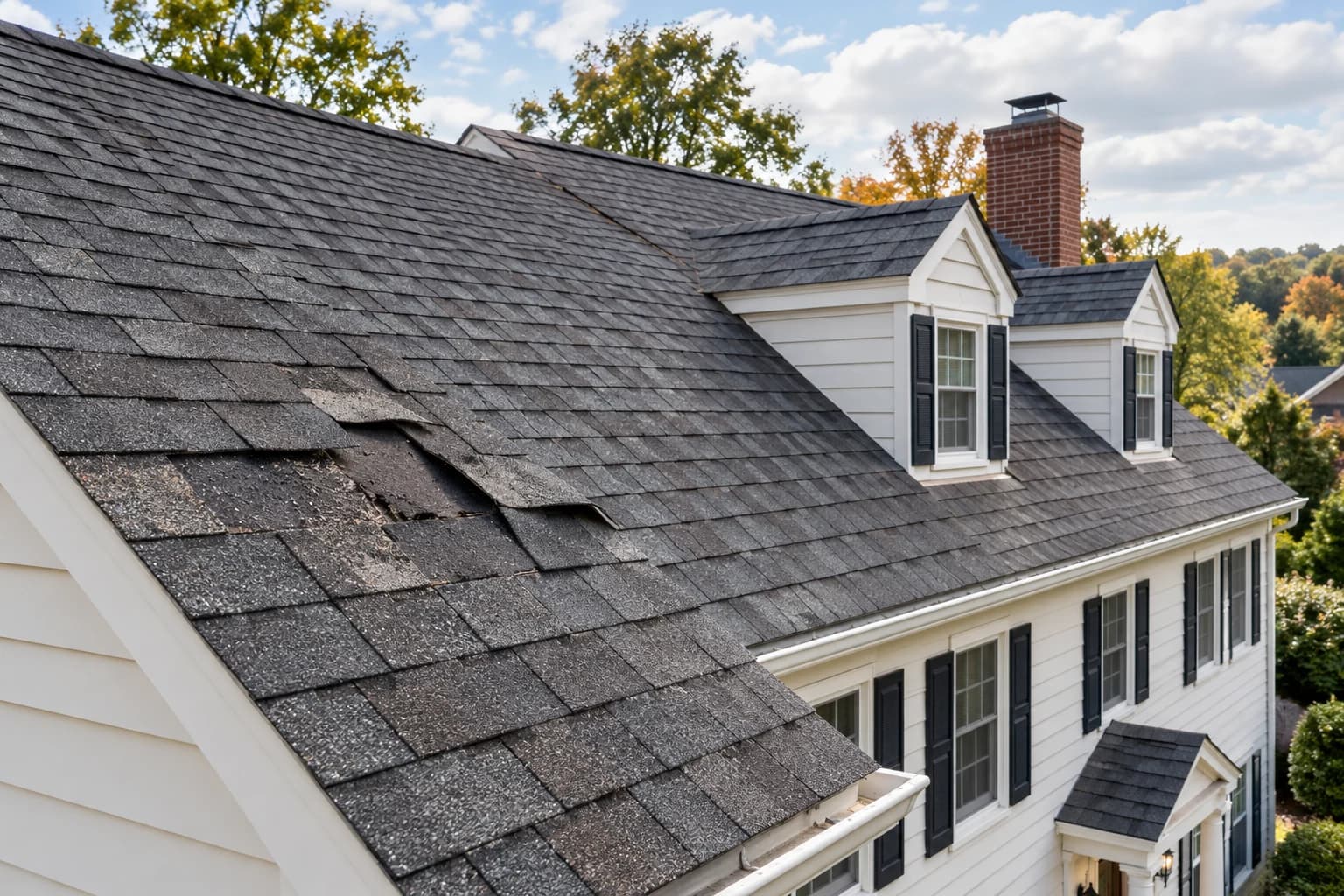
Illustration created for this guide.
Roof Repair vs. Replacement in NJ: How to Make the Right Decision
An isolated leak and a worn-out roof can look surprisingly similar from inside the house. Both may produce a stained ceiling, but they call for different decisions. A sound roof with one failed connection may need a focused repair. A roof with widespread deterioration may need a larger plan even if the indoor stain is small.
For New Jersey homeowners comparing estimates, the goal is to understand what each proposal solves, how long the remaining roof is likely to be useful, and what risks remain after the work. A low repair price is not helpful if it leaves the actual cause untouched. Replacement is not automatically the best answer simply because a roof has reached a particular birthday.
Start with the condition of the whole assembly
A roofing system includes shingles or membrane, underlayment, decking, flashings, drainage, and ventilation details. A recommendation should account for these connected parts. An attractive shingle surface can hide a deteriorated penetration, while a damaged patch does not necessarily condemn every other slope.
Ask for photos of both the problem area and representative areas elsewhere. If the contractor recommends replacement, ask which observed conditions make a repair unreliable. If repair is recommended, ask what was checked outside the immediate leak area.
When a focused roof repair may make sense
A localized repair is worth considering when the defect can be identified, surrounding materials can be integrated successfully, and the rest of the roof remains serviceable. Examples include a limited area of wind damage, a failed pipe flashing, or a specific chimney connection.
The critical word is identifiable. A proposal to spread sealant over a broad area without explaining the cause does not provide the same confidence as a documented repair scope. Read our chimney flashing leak guide for an example of how one connection can affect an otherwise usable roof.
When replacement deserves serious consideration
Replacement becomes more relevant when deterioration is widespread, leaks recur in several unrelated locations, or successful repairs would require disturbing large amounts of brittle material. Significant decking damage or an unsuitable existing roof assembly can also change the calculation.
The roof's history matters. Collect the installation date if known, any warranty paperwork, previous repair invoices, and notes about recurring leaks. These records give the inspection context without replacing the need to look at the actual roof.
| Factor | Supports exploring repair | Supports exploring replacement |
|---|---|---|
| Damage extent | One clearly defined location | Several slopes or repeated failures |
| Surrounding materials | Sound enough to integrate | Brittle, deteriorated, or extensively damaged |
| Water entry | Traceable detail | Multiple unresolved entry points |
| Decking | Limited localized issue | Broader deterioration requiring investigation |
| Owner's plans | Solve a specific defect now | Coordinate a comprehensive exterior project |
This comparison frames questions for an inspection. It cannot determine the correct scope from photographs alone.
Compare the remaining problem, not just the price
Ask what remains after each option. A flashing repair may resolve the current leak while leaving aging shingles elsewhere. A new shingle roof may still exclude chimney masonry, gutters, attic insulation, or an unrelated wall leak.
For an older home in Essex or Union County, coordinating roof work with deteriorated fascia or siding may avoid paying for repeated access. For a home with a recently installed roof, preserving a sound assembly may be a better discussion. Neither outcome should be assumed before inspection.
When proposals differ, request separate descriptions of the immediate repair and any recommended future work. This lets you distinguish urgent water-entry work from optional improvements.
What a repair quote should explain
Look for the entry point, materials to be removed, replacement components, concealed-damage allowances, cleanup, and workmanship coverage. Ask how new roofing connects to the existing roof and whether a color mismatch is likely.
For replacement, compare tear-off scope, decking pricing, underlayment, flashings, ventilation, disposal, and the product system. Our roof replacement estimate checklist walks through those line items in more detail.
Timing and weather considerations
An active leak may require temporary stabilization before the final decision is made. Ask whether the temporary work is included in a later repair or replacement price. Keep indoor damage photos and avoid treating a dry day as proof that an intermittent leak has resolved itself.
Discuss access, driveway use, landscaping protection, and material delivery before work begins. Weather, concealed conditions, and product requirements can affect the schedule, so a sensible plan includes how changes will be communicated.
Frequently asked questions
Does one leak mean I need a new roof?
No. The cause and wider roof condition determine the scope. One flashing failure on a serviceable roof is different from several leaks across deteriorated materials.
Is roof age enough to decide?
No. Age is useful context, but installation quality, material condition, exposure, and repair history also matter. Ask for evidence tied to your property.
Should I get both repair and replacement options?
When both are technically viable, seeing both scopes can help. A contractor should also explain if one option cannot responsibly address the observed condition.
How do I start with Duraproof?
Tell us what is happening and where the property is located. Duraproof offers roof repairs and roof replacement across its 10-county New Jersey service area. Request a free estimate or call (551) 430-2998.
Have a project in mind?
Tell Duraproof what needs fixing or what you want to improve. Start with the job and your contact details; we can work through the rest together.