.png&w=640&q=75)
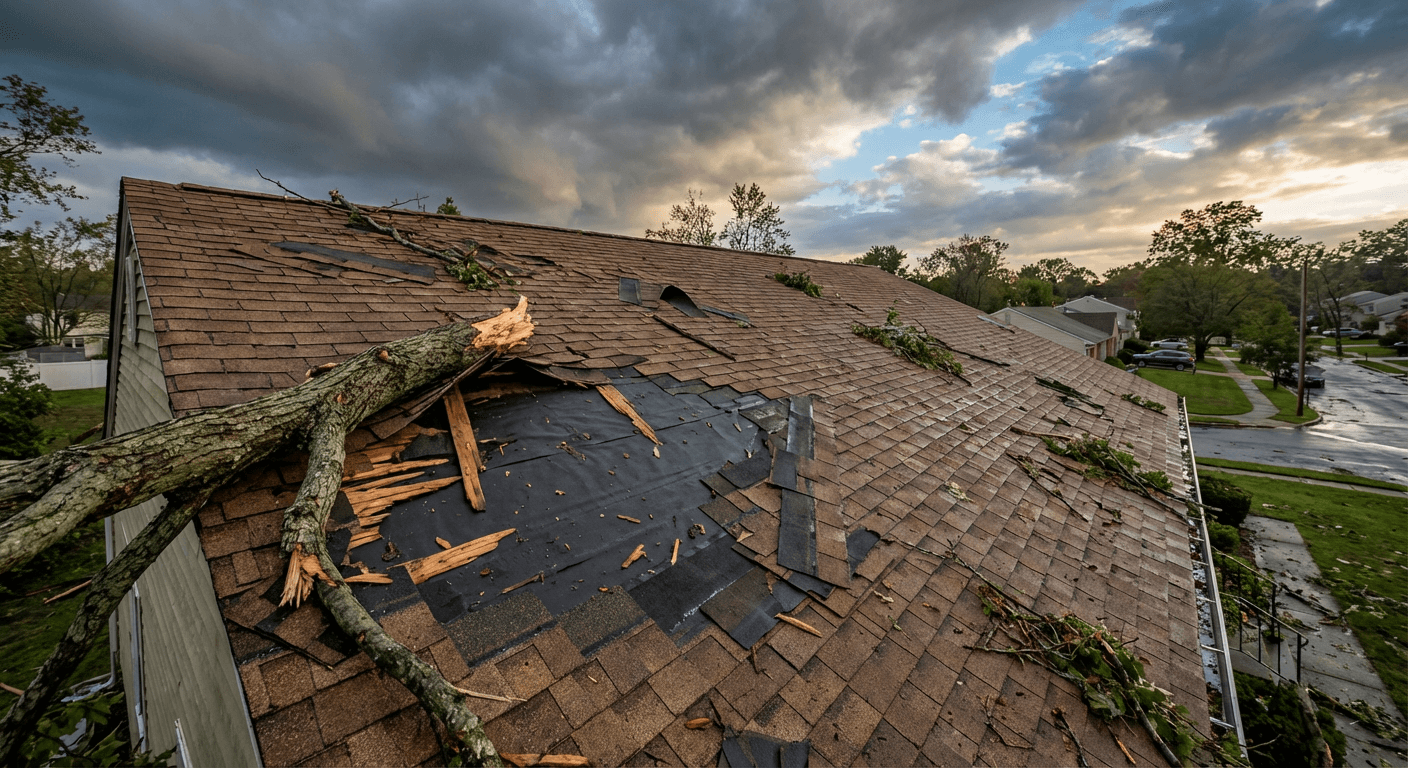
Storm Damage Roof Repair: What NJ Homeowners Need to Do First
New Jersey gets hit with everything — nor'easters, thunderstorms, hail, and high winds. When a storm damages your roof, acting quickly is critical. Here's your step-by-step guide for the hours and days immediately after storm damage.
Step 1: Stay Safe First
Do not climb onto a wet or damaged roof. After a storm, structural integrity may be compromised. Downed power lines, unstable branches, and slippery surfaces create serious hazards.
Your safety comes before any inspection.
Step 2: Document Everything
Before any cleanup or repairs, photograph everything. Use your phone to capture:
- Damaged shingles or missing sections
- Any dents in gutters, siding, or vents
- Interior water damage (ceiling stains, wet insulation)
- Debris on the roof or around the home
This documentation is critical for your insurance claim.
Step 3: Apply Emergency Tarps
If there are visible holes or missing shingles, water can enter your home with the next rain. A licensed contractor can apply emergency tarps to protect your home while permanent repairs are arranged.
Do not use this as a long-term solution — tarps degrade and can cause their own damage if left for more than a few weeks.
Step 4: Contact Your Insurance Company
File your claim as soon as possible. Most homeowner policies cover wind and hail damage. Be sure to:
- Request a claim number immediately
- Ask when an adjuster will be sent
- Note the adjuster's name and contact info
Step 5: Hire a Licensed NJ Roofing Contractor
Before your insurance adjuster arrives, have a licensed contractor do their own damage assessment. A reputable roofer will:
- Document damage independently
- Help you understand what should be covered
- Ensure nothing is missed in the adjuster's report
At Exterior LLC, we work directly with insurance companies and have helped hundreds of NJ homeowners navigate storm claims successfully.
Common Storm Damage Types in New Jersey
Hail Damage: Look for circular dents on shingles, gutters, and AC units. Hail damage is often subtle but devastating over time.
Wind Damage: High winds can lift shingles at the edges, break seals, and cause entire sections to peel back.
Falling Tree Limbs: Even small limbs can crack decking and puncture the membrane beneath shingles.
Ice Dams: In winter storms, ice dams form at the roof edge, forcing water backward under shingles.
Don't Wait — Water Damage Gets Expensive Fast
A small roof breach can result in mold growth within 24-48 hours in humid New Jersey summers. What starts as a $500 shingle repair can become a $15,000 mold remediation project.
Call Exterior LLC immediately after storm damage. We offer 24/7 emergency response for NJ homeowners.
Have a project in mind?
Tell Duraproof what needs fixing or what you want to improve. Start with the job and your contact details; we can work through the rest together.