.png&w=640&q=75)
Retaining Walls in NJ: Materials, Uses, and What You Need to Know
New Jersey's varied terrain — rolling hills, sloped lots, and properties with significant grade changes — makes retaining walls one of the most practical and aesthetically valuable additions a homeowner can make.
What Is a Retaining Wall?
A retaining wall holds back soil to create level areas on sloped properties. Beyond function, they can create stunning terraced gardens, outdoor living spaces, and dramatic landscaping features.
Do You Need a Retaining Wall?
You likely need a retaining wall if you have:
- A sloped yard where soil erodes after rain
- A driveway or patio area where soil is shifting toward it
- A hillside that's difficult to mow or use
- Standing water issues after rain due to grade
- An existing wall that's bowing, cracking, or leaning
Retaining Wall Materials
Segmental Retaining Wall Blocks
Interlocking concrete blocks (brands like Allan Block, Versa-Lok) are the most popular choice for NJ residential properties. They're durable, attractive, and designed to work with NJ's freeze-thaw conditions. Available in many colors and textures.
Natural Stone
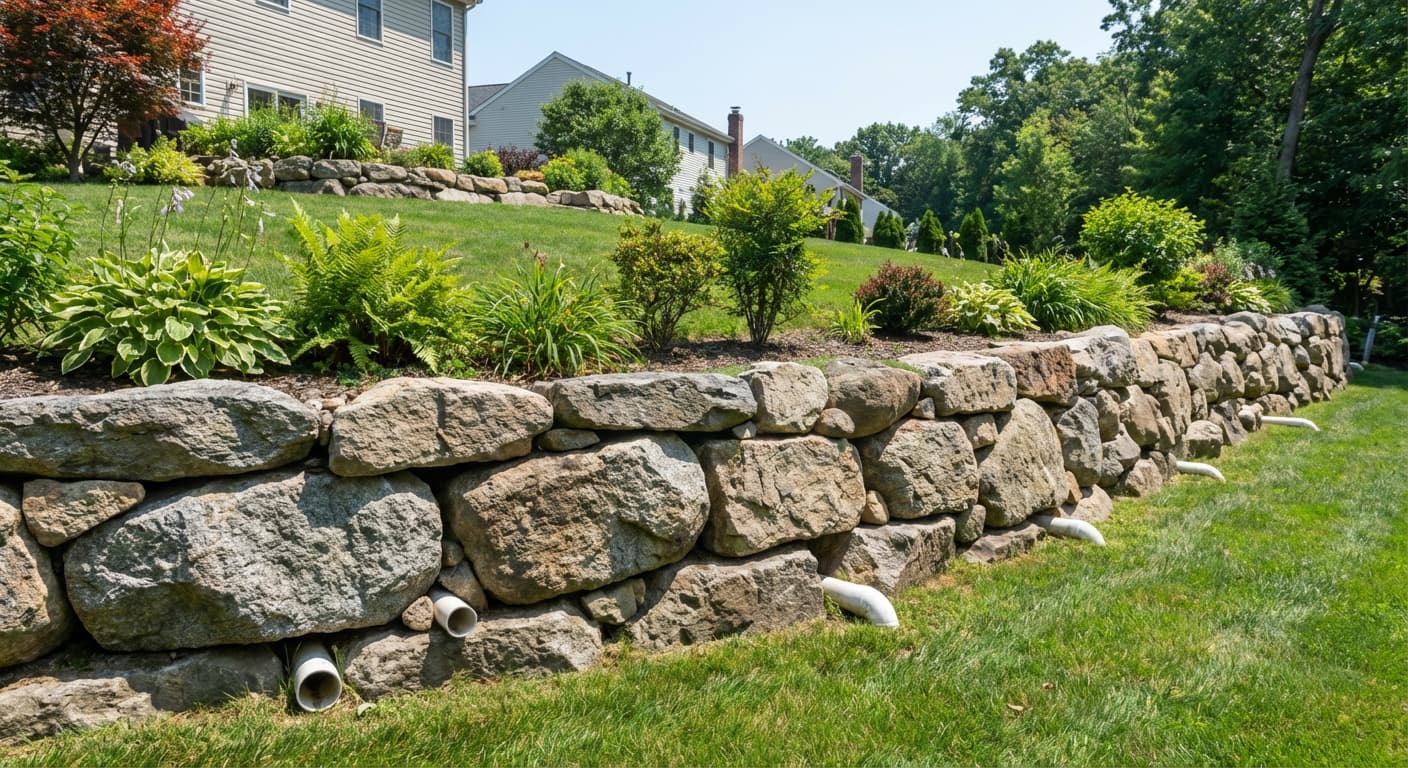
Fieldstone, granite, and limestone walls have a timeless, organic look that blends beautifully with NJ's natural landscape. Dry-stacked stone walls allow drainage without mortar and can last 100+ years when built correctly.
Poured Concrete
For taller walls or areas with significant lateral pressure, poured concrete with proper reinforcement is the engineer's choice. Less decorative but extremely strong.
Pressure-Treated Timber
Used for shorter walls (under 4 feet) in casual garden settings. Less expensive but has a lifespan of 15-20 years before it begins to deteriorate.
Brick or CMU Block
Mortared brick or concrete masonry unit walls are formal and refined. They require proper drainage behind the wall to prevent hydrostatic pressure buildup.
Critical: Drainage Behind Retaining Walls
The number one cause of retaining wall failure is water pressure. Proper drainage — typically crushed stone backfill and perforated drainage pipe — must be installed behind every retaining wall.
Without proper drainage, even the best-built wall will eventually bow or fail.
When Is a Permit Required in NJ?
In most NJ municipalities, retaining walls over 4 feet in height (measured from the base to the top) require a permit and engineered drawings. Exterior LLC handles the permitting process for you.
Cost of Retaining Walls in NJ
Costs vary significantly by material and wall height:
- Segmental block: $25–$50 per square face foot
- Natural stone: $35–$75 per square face foot
- Poured concrete: $30–$60 per square face foot
Contact Exterior LLC for a free retaining wall consultation. We design and build walls that are structurally sound, properly drained, and beautiful.
Have a project in mind?
Tell Duraproof what needs fixing or what you want to improve. Start with the job and your contact details; we can work through the rest together.