.png&w=640&q=75)
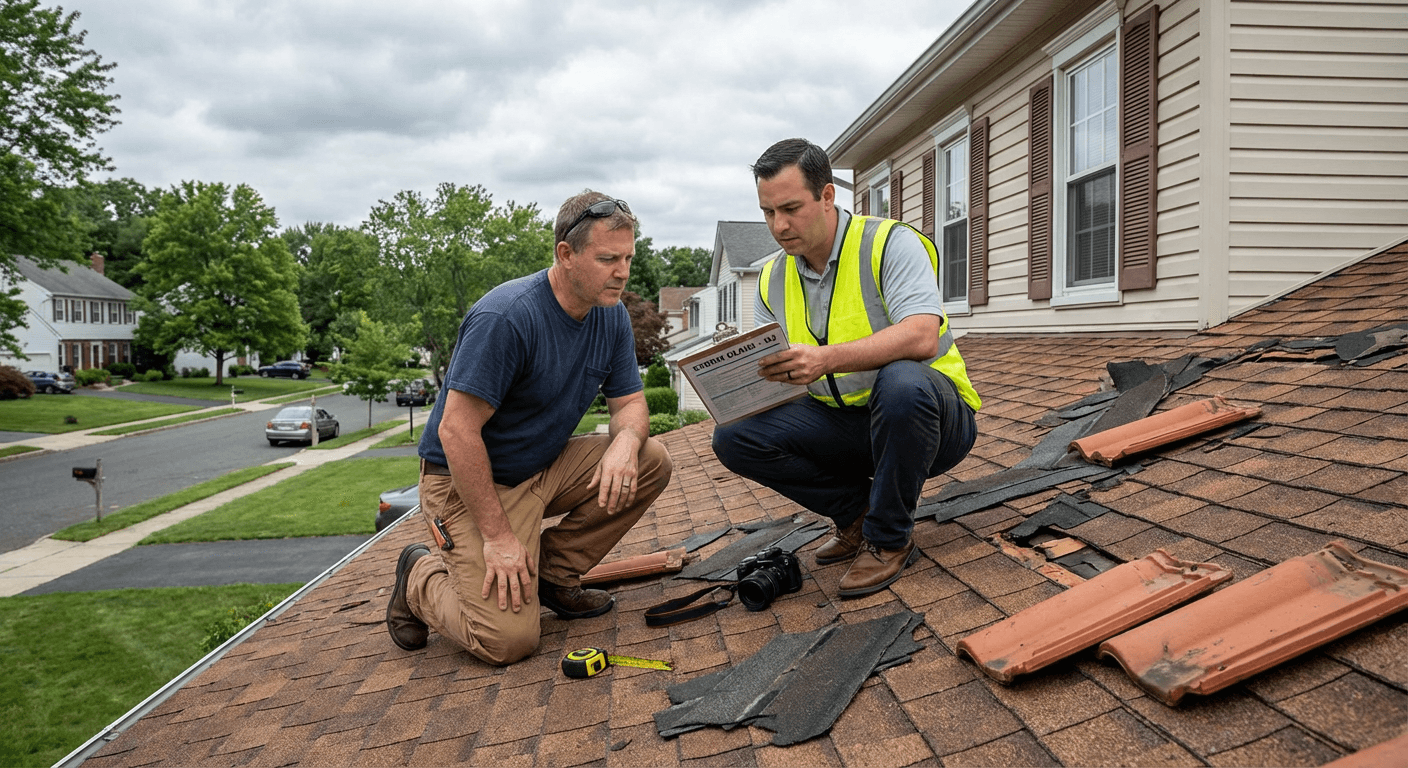
Filing a Homeowner's Insurance Claim for Roof Damage in NJ
A major storm hits. Your roof is damaged. Now what? Many homeowners leave thousands of dollars on the table by not knowing how to properly file and document a roof damage claim. Here's how to do it right.
Step 1: Understand What's Covered
Most standard homeowner's insurance policies in NJ cover sudden and accidental damage from:
- Wind (any windstorm, not just named storms)
- Hail
- Falling trees or debris
- Fire
- Weight of ice or snow
What's generally NOT covered:
- General wear and tear
- Damage from lack of maintenance
- Pre-existing conditions
- Intentional damage
Key point: If your roof is old and in poor condition, your insurer may only pay the Actual Cash Value (ACV) — meaning they depreciate the payout based on the roof's age. Newer roofs get Replacement Cost Value (RCV) — full replacement cost.
Step 2: Document Everything Before Touching Anything
Photograph and video every piece of damage you can safely access:
- Missing, cracked, or dented shingles
- Damaged gutters, vents, skylights
- Siding or trim damage from the same storm
- Interior ceiling or wall stains
- Damaged personal property
Step 3: Call Your Insurance Company Promptly
Most policies require you to report damage within a reasonable time — some specify 30-60 days. Don't delay. Request:
- A claim number
- The adjuster's name and expected visit date
- A copy of your policy's declarations page if you don't have one
Step 4: Get a Contractor's Assessment Before the Adjuster Arrives
Having your own contractor's documented assessment is valuable. A good roofing contractor will:
- Identify all storm-related damage
- Create a detailed scope of work
- Be available to walk the roof with the adjuster if needed
At Exterior LLC, we assist homeowners through the entire claims process and work directly with insurance adjusters.
Step 5: Be Present for the Adjuster's Visit
Never let the adjuster inspect alone. Walk the roof with them or have your contractor present. Adjusters can miss things — not out of dishonesty, but because they cover many claims and may not be roofing specialists.
Step 6: Review the Adjuster's Report Carefully
When you receive the adjuster's estimate:
- Compare it to your contractor's scope
- Look for items that were missed
- Check whether they're paying ACV or RCV
- Note the deductible amount
If items are missing, request a supplemental claim in writing.
Step 7: Understanding Depreciation and RCV
If your policy pays RCV, you typically receive the ACV payment first. Once repairs are completed, you submit your contractor's final invoice and the insurer releases the recoverable depreciation (the held-back portion).
This is why finishing the job with a licensed contractor and getting proper documentation matters so much.
Working with Exterior LLC on Insurance Claims
We have years of experience working with all major insurance carriers in NJ. We'll document everything properly, provide a detailed estimate that matches insurance industry standards, and help ensure nothing is overlooked.
Call us the day of storm damage. The sooner we document, the stronger your claim.
Have a project in mind?
Tell Duraproof what needs fixing or what you want to improve. Start with the job and your contact details; we can work through the rest together.