.png&w=640&q=75)
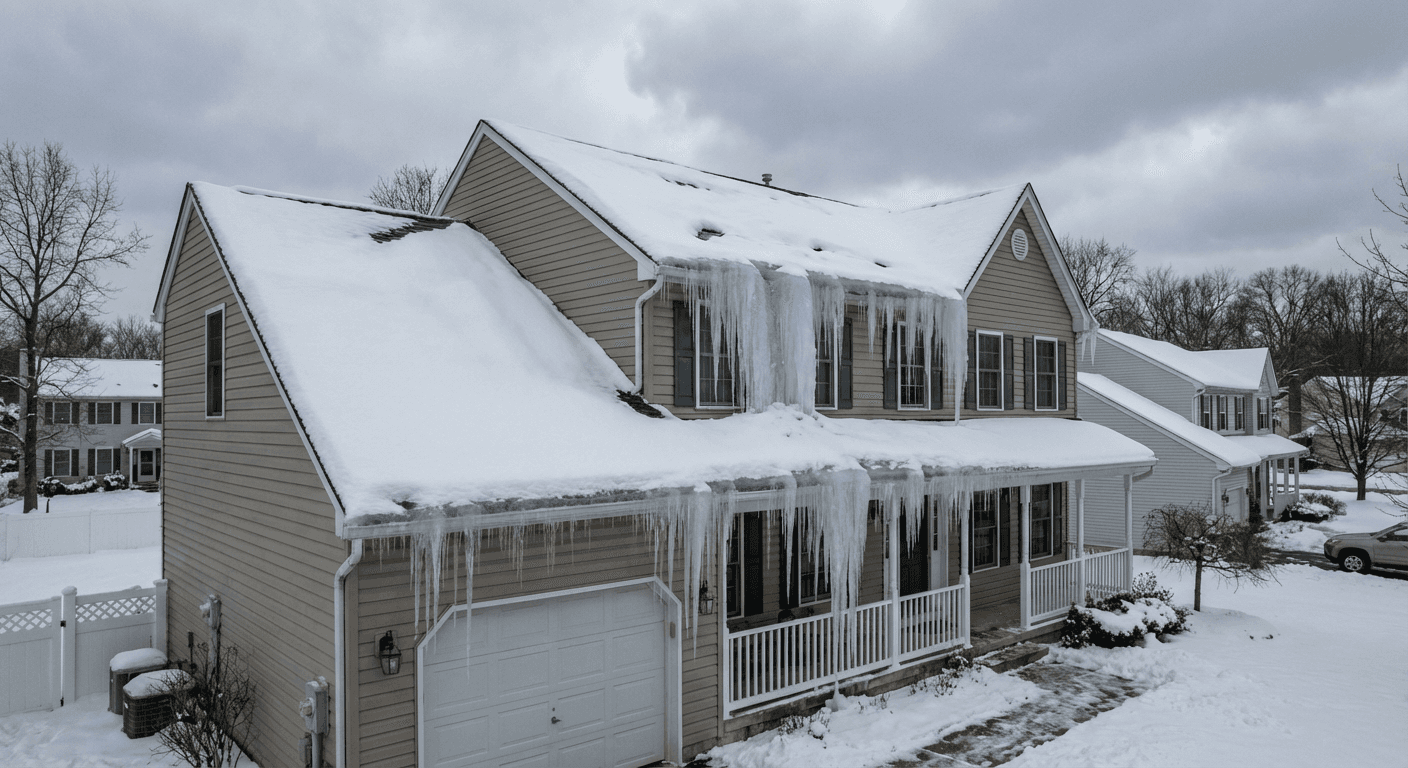
Ice Dams: How to Prevent and Remove Them on Your NJ Roof
Every winter in New Jersey, thousands of homes develop ice dams — and many homeowners don't realize the damage they're causing until spring. Understanding what ice dams are and how to address them can save you from costly repairs.
What Is an Ice Dam?
An ice dam is a ridge of ice that forms at the edge of a roof and prevents melting snow from draining off. As the snow on your roof melts (from heat escaping through the attic), the water runs toward the cold eaves. There, it refreezes, building up an ever-larger dam.
As the dam grows, backed-up water has nowhere to go — so it seeps under the shingles, into the roof deck, down into the wall cavity, and eventually into your living space.
What Causes Ice Dams?
The root cause is heat loss through the attic. When your attic is warmer than outside air (even just a few degrees above freezing), it heats the roof deck from beneath, causing the snow above to melt.
Contributing factors:
- Insufficient attic insulation
- Air leaks from living space into attic (around light fixtures, plumbing, etc.)
- Poor attic ventilation
- Roof valleys and north-facing slopes that receive less sunlight
Signs You Have an Ice Dam
- Large icicles forming along the eave (especially if they're wide, flat, and pressed against the fascia)
- Water stains appearing on ceilings or walls during or after a thaw
- Wet insulation in the attic
- Staining on the exterior fascia
Immediate Response: Safe Ice Dam Removal
Do NOT chip away at ice dams with a hammer or ice pick. You will damage shingles and potentially injure yourself.
Safe removal options:
Calcium chloride (ice melt): Fill a tube sock or nylon stocking with calcium chloride ice melt and lay it across the ice dam perpendicular to the eaves. It will slowly melt a channel for water to drain.
Roof raking: Use a roof rake (long-handled tool) to remove snow from the lower 4-6 feet of your roof after snowfalls. This eliminates the snow source before it can melt and refreeze at the eave.
Professional steaming: A licensed contractor can remove ice dams quickly using low-pressure hot water steam — the safest and fastest method.
Long-Term Prevention
The only permanent solution is addressing the underlying heat loss:
- Add attic insulation to meet NJ's code minimum of R-49
- Air-seal the attic floor to stop warm air from leaking up
- Ensure adequate attic ventilation with proper soffit and ridge vent ratios
- Install ice and water shield along eaves (required by NJ code for new roofing — at least 24 inches from the exterior wall)
Exterior LLC's Ice Dam Services
We offer professional ice dam removal and post-winter roof assessments to identify any damage caused by winter ice buildup. We also install proper ice and water shield underlayment on every roof replacement we perform.
Call us for emergency ice dam removal or to schedule a post-winter roof inspection.
Have a project in mind?
Tell Duraproof what needs fixing or what you want to improve. Start with the job and your contact details; we can work through the rest together.