.png&w=640&q=75)
Flat Roofing 101: Everything NJ Homeowners and Business Owners Should Know
Flat roofs are everywhere in New Jersey — on commercial buildings, row homes, additions, and garages. They look simple, but flat roofing requires specialized knowledge and materials. Here's what you need to know.
What Makes Flat Roofing Different
Unlike sloped roofs that shed water through gravity, flat roofs rely on a slight pitch (usually 1/4 inch per foot) and a completely waterproof membrane to manage water. Even a small failure in that membrane can lead to significant water intrusion.
Common Flat Roofing Materials
TPO (Thermoplastic Polyolefin)
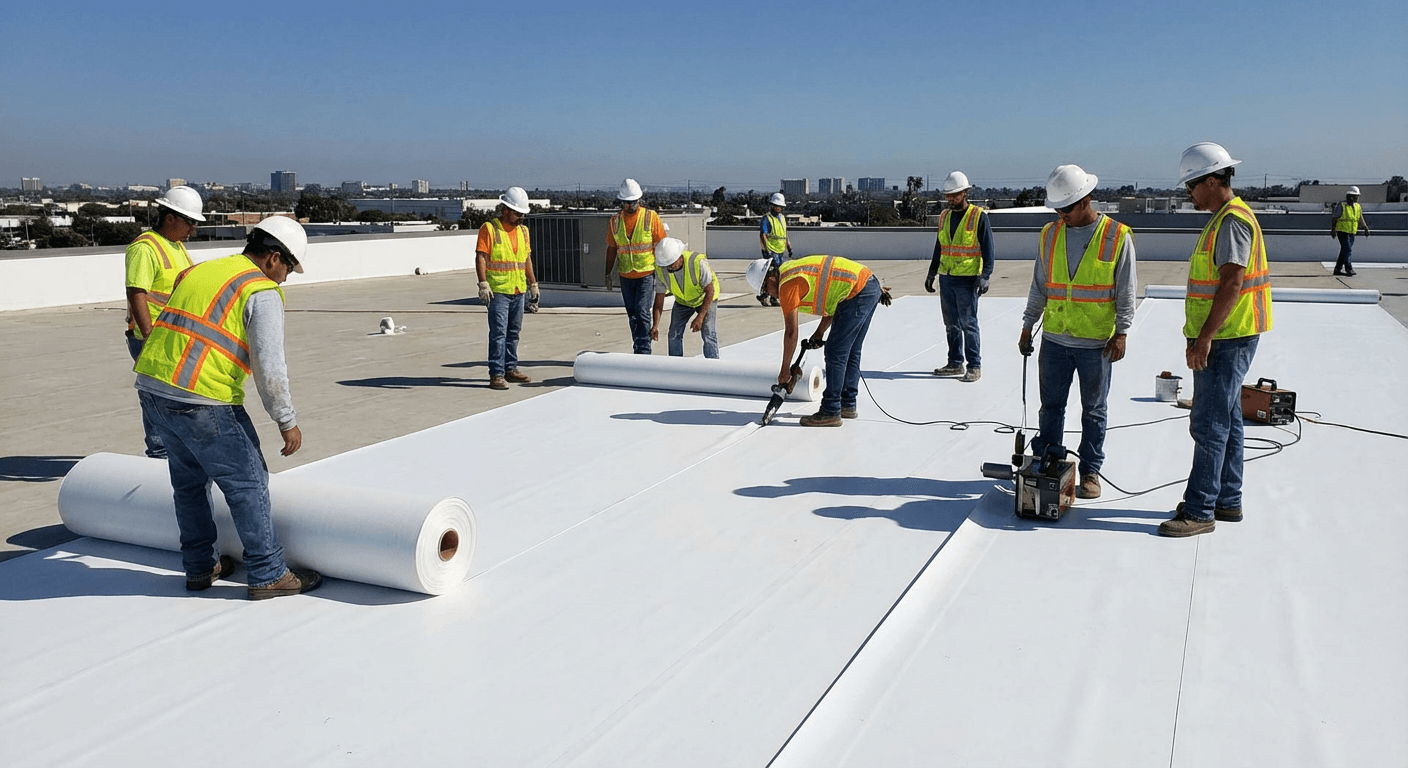
The most popular flat roofing material today. TPO is white, highly reflective (reducing cooling costs), resistant to UV, and heat-welded at seams for a watertight seal. Lifespan: 15-30 years.
EPDM (Ethylene Propylene Diene Monomer)
A black rubber membrane that has been used for decades. Extremely durable and flexible in cold weather — great for NJ winters. Lifespan: 20-30 years.
Modified Bitumen
A multi-layer system applied with heat or adhesive. Very tough and resistant to foot traffic. Often used on buildings where rooftop equipment requires frequent access. Lifespan: 15-20 years.
Built-Up Roof (BUR)
The traditional "tar and gravel" roof. Multiple layers of roofing felt and hot asphalt create a very durable surface. Less common today due to labor intensity. Lifespan: 20-30 years.
Common Flat Roof Problems in New Jersey
Ponding Water: Water that sits on the roof for more than 48 hours accelerates membrane degradation. Proper drainage is essential.
Membrane Blistering: Air or moisture trapped beneath the membrane creates bubbles. These eventually crack and allow water infiltration.
Flashing Failures: Where the roof meets walls, parapets, or penetrations (vents, HVAC units), flashing is the most vulnerable point. NJ's temperature swings stress these joints constantly.
Debris Accumulation: Flat roofs collect leaves, branches, and dirt that hold moisture and block drains.
Flat Roof Maintenance Tips
- Clean drains and scuppers at least twice a year
- Inspect after every major storm
- Keep foot traffic to a minimum
- Address blisters or cracks immediately — they don't self-heal
When to Replace vs. Repair
If your flat roof is under 10 years old and has isolated damage, repairs make sense. If it's over 15 years old or has widespread membrane failure, replacement is more cost-effective.
Exterior LLC handles flat roofing installations and repairs across NJ. Contact us for a free inspection and estimate.
Have a project in mind?
Tell Duraproof what needs fixing or what you want to improve. Start with the job and your contact details; we can work through the rest together.